What if the searing heat and itching you associate with reaching a level 10 blonde isn't a necessary evil, but a sign of outdated chemistry? For many, the search for an effective hair bleach for sensitive scalp ends in frustration or patchy, orange results because they wash the product off too early to escape the discomfort. It's a common struggle to balance the desire for a high-lift transformation with the reality of a reactive, delicate skin barrier.
We agree that you shouldn't have to choose between your scalp's health and your aesthetic goals. This guide provides a professional roadmap to achieving a clean level 10 lift while maintaining total scalp comfort and hair elasticity. You'll discover how bond-building technology, specifically the Maleic Acid found in Brilliant Blondexx, protects the hair fibers and the skin during the chemical process. We will detail the technical mixing ratios, the importance of developer selection, and the expert application techniques needed to eliminate yellow tones without the typical irritation.
Key Takeaways
- Learn why standard high-alkalinity powders disrupt the scalp's acid mantle and how to distinguish between normal tingling and a chemical burn.
- Discover how Maleic Acid technology in Brilliant Blondexx acts as a protective buffer, making it the premier hair bleach for sensitive scalp by shielding the skin during oxidation.
- Master the "20 Volume Rule" to achieve a clean level 10 lift through a controlled chemical reaction that prioritizes skin integrity over speed.
- Understand the technical necessity of the 48-hour pre-bleach waiting period to leverage natural sebum as a secondary barrier against irritation.
- Implement a corrective post-lightening routine using Argan Oil Miracle to seal the hair cuticle and soothe the scalp immediately after the process.
Table of Contents
- The Anatomy of Scalp Irritation: Why Standard Bleach Stings
- The Science of Bond Protection: How Brilliant Blondexx Changes the Lift
- Choosing Your Developer: The Secret to Pain-Free Lightening
- Case Study: Achieving Level 10 Platinum on a Sensitive Base
- Post-Bleach Recovery: Maintaining Scalp Health and Blonde Brilliance
The Anatomy of Scalp Irritation: Why Standard Bleach Stings
Scalp irritation during lightening is almost always a result of a pH conflict. Your scalp maintains a natural acid mantle with a pH of approximately 5.5, which serves as a biological barrier against bacteria and moisture loss. Standard bleaching agents are highly alkaline, often reaching a pH of 11 or 12 to effectively swell the hair cuticle. When these caustic formulas contact the skin, they immediately neutralize the acid mantle, causing the skin to lose its protective lipids and become inflamed. Understanding the chemical process of hair bleaching reveals that this alkalinity is necessary for the lift, but without protective buffers, it's inherently abrasive to human tissue.
It's vital to distinguish between expected processing sensations and actual injury. A mild, transient tingling or occasional itch is a normal byproduct of the oxidation process. However, if you experience intense heat, throbbing, or a sensation of "needles" on the skin, you are likely witnessing a chemical burn. Contact dermatitis is a localized skin inflammation characterized by redness, itching, or blistering that occurs when the scalp reacts negatively to the caustic chemicals found in traditional hair lighteners. If the skin begins to weep or scab post-application, the formula used was too aggressive for your specific sensitivity level.
The Role of Ammonia and Persulfates
Most high-lift powders rely on ammonia and persulfates to accelerate the lightening process. These ingredients release gases that can cause both respiratory discomfort and acute skin sensitivity. Many professional brands prioritize speed, creating "high-speed" formulas that reach level 10 quickly but at the cost of skin integrity. Choosing a hair bleach for sensitive scalp often means opting for "dust-free" formulas. These heavier particles don't become airborne during mixing, which prevents the chemicals from settling into open pores or being inhaled, significantly reducing the risk of an inflammatory response.
Identifying Your Sensitivity Level
A professional-grade result starts with a personalized diagnosis of your scalp's current state. If your scalp is naturally dry or prone to flaking, you lack the sebum levels required to act as a secondary barrier against bleach. Environmental factors also play a role; recent sun exposure, vigorous brushing, or washing your hair less than 48 hours before your session can leave the skin raw and reactive. To ensure safety, a patch test is non-negotiable. Apply a small amount of the mixed lightener behind the ear for 20 minutes. If redness or swelling occurs, your skin barrier is currently too compromised for a full-head application.
The Science of Bond Protection: How Brilliant Blondexx Changes the Lift
The primary challenge with traditional lightening is that the oxidation process is indiscriminate. It breaks down melanin to lift color, but it also attacks the keratin bonds that provide hair with its structural integrity. For those seeking a hair bleach for sensitive scalp, this chemical aggression often extends to the skin, causing the uncomfortable skin reactions to hair products that many users fear. Brilliant Blondexx addresses this by integrating Maleic Acid directly into the lightener. This molecule acts as a protective buffer, reinforcing the hair's internal structure while simultaneously shielding the scalp from the harshest effects of the alkaline reaction.
If you are transitioning from a Level 5 light brown to a Level 10 platinum, the chemistry of your lightener determines your success. Standard powders often cause the hair to become brittle and the scalp to become raw before the desired lift is achieved. By using a bond-integrated protective matrix, you can maintain a "low and slow" approach. This method prioritizes hair health over rapid, aggressive lifting. The result is a clean blonde base that retains its elasticity and shine, rather than the dry, straw-like texture common with drugstore alternatives. It's a corrective approach that respects the biological limits of your hair and skin.
Maleic Acid vs. Traditional Lighteners
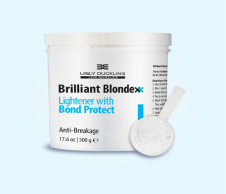
Traditional lighteners often require external bond builders to be added manually. This can alter the mixing ratio and lead to unpredictable lift levels. Brilliant Blondexx simplifies this process by building the protection into the formula. Maleic Acid works by cross-linking the keratin chains, preventing them from snapping during the lifting process. This creates a soothing effect on the epidermal layer, reducing the inflammatory response. If you want to achieve professional results without the guesswork of additives, you should explore bond-building lighteners that provide an all-in-one solution for fragile hair.
The Importance of a Dust-Free Formula
The physical properties of your bleach are just as important as the chemical ones. A dust-free powder consists of heavier particles that don't float in the air during mixing. This prevents accidental inhalation and keeps the product from settling on unintended areas of the skin. When mixed with the correct developer, Brilliant Blondexx transforms into a creamy consistency that's ideal for precise on-scalp application. This creamy texture serves several functions:
- Moisture Retention: It stays moist on the hair longer, allowing the chemical reaction to continue steadily without drying out.
- Controlled Reaction: It reduces the need for high-volume developers, which are the leading cause of scalp irritation.
- Precise Placement: It stays exactly where you apply it, preventing "bleach creep" that can lead to overlapping and breakage.
Choosing Your Developer: The Secret to Pain-Free Lightening
The developer you choose acts as the engine for your lightener. If that engine runs too fast, the heat generated can overwhelm a delicate skin barrier. For a hair bleach for sensitive scalp to remain truly pain-free, you must follow the 20 Volume Rule. While amateur forums often suggest using 30 or 40 Volume developers to "get the lift over with," this is a dangerous approach for sensitive users. A 20 Volume developer (6% peroxide) provides a controlled, steady release of oxygen. When paired with the bond-building technology in Brilliant Blondexx, this concentration allows you to reach a level 10 lift without triggering the inflammatory response associated with more aggressive mixtures.
Success lies in finding the "Sweet Spot" between lift time and scalp exposure. A higher developer strength doesn't just lift color faster; it increases the rate of the chemical reaction on your skin. By staying with 20 Volume, you extend the processing time slightly, but you keep the scalp's temperature stable. This prevents the "fire" sensation that causes many people to wash their bleach off prematurely, which usually results in the dreaded orange or brassy finish. Professional results require patience and the correct chemical balance.
20 Vol vs. 30 Vol for On-Scalp Application
The "sting factor" increases exponentially with every 10 volumes of developer. Use the following guide to understand the risks associated with different strengths during on-scalp lightening:
| Developer Volume | Lift Performance | Scalp Reaction Risk |
|---|---|---|
| 20 Vol (6%) | Controlled, up to 7 levels | Low; ideal for sensitive skin |
| 30 Vol (9%) | Rapid, high lift | Moderate to High; potential for itching |
| 40 Vol (12%) | Extreme, aggressive | Very High; risk of chemical burns |
We strongly advise against using 40 Volume developer directly on the skin. The concentration of hydrogen peroxide is too high for the scalp to process safely, often leading to immediate blistering or long-term contact dermatitis. If your hair is exceptionally dark, it's safer to perform two separate 20 Volume sessions than one high-heat session that compromises your skin integrity.
Consistency and Saturation
The physical state of your mixture determines how much product actually touches your pores. A runny or watery bleach mixture is prone to "bleeding," where the product travels down the hair shaft and pools on the scalp. This pooling creates concentrated hot spots of irritation. You should aim for a "sour cream" consistency that stays exactly where it's placed. To ensure you reach this perfect texture every time, use the Color Mix Calculator to maintain a precise 1:2 mixing ratio.
When applying the product, use a professional tint brush to lay the bleach onto the roots. Do not massage or rub the mixture into the scalp with your fingers. Massaging forces the alkaline chemicals into the hair follicles and pores, which is a leading cause of post-bleach itching and flaking. Simply saturate the hair fibers thoroughly and let the chemistry do the work. If the product stays moist and the ratio is correct, the lift will be even and the scalp will remain calm.
Case Study: Achieving Level 10 Platinum on a Sensitive Base
To demonstrate the efficacy of a hair bleach for sensitive scalp, we followed a specific protocol for a subject with Level 4 dark brown hair and a documented history of scalp itching. The objective was to reach a clean Level 10 platinum base without the subject experiencing the typical "burning" sensations associated with high-lift powders. By combining Brilliant Blondexx with a 20 Volume developer, we maintained a controlled oxidation rate that respected the subject's skin barrier while effectively lifting the dark pigment.
Step 1: The "No-Wash" Barrier
The preparation for a sensitive scalp application begins days before the bleach touches the hair. We instructed the subject not to wash their hair for a full 48 hours prior to the appointment. This allows natural sebum to accumulate; these oils act as a biological secondary barrier that cushions the scalp against the alkaline pH of the lightener. If you have a buildup of heavy styling products, use a clarifying shampoo three days before your session. On the day of application, we applied Argan Oil Miracle along the hairline and ear tips to prevent contact irritation in these highly reactive zones.
Step 2: The Precise Application
We began the application at the nape of the neck. The scalp at the back of the head is generally less sensitive and slightly cooler than the crown, allowing for a more stable start. Using 1/8 inch sub-sections is the professional standard for ensuring maximum saturation. If the sections are too thick, the bleach cannot penetrate evenly, leading to "hot spots" where the product works too hard on the outside while leaving the inside orange. We monitored the lift every 10 minutes, ensuring the product stayed moist. Because Brilliant Blondexx is a bond-building hair bleach for sensitive scalp, we could leave it on for the full processing time required for a Level 10 lift without the subject reporting discomfort.
Step 3: Rinsing and Neutralizing
Once the desired pale yellow level was achieved, the rinsing process was critical. We used lukewarm water; hot water opens the pores and can cause a sudden spike in sensitivity post-bleach. We applied a pH-balanced wash to stop the oxidation process instantly and return the scalp to its natural acidic state. To finish the look without introducing further chemicals, we transitioned to the toning phase using Blondify ammonia-free toners. This corrective sequence resulted in a perfect platinum finish, healthy hair elasticity, and a completely calm, non-reactive scalp. To achieve these professional results at home, you can order Brilliant Blondexx for your next session and follow this structured methodology.
Post-Bleach Recovery: Maintaining Scalp Health and Blonde Brilliance
After successfully using a hair bleach for sensitive scalp, your focus must shift from lifting to stabilization. The alkalinity of the bleaching process, even when buffered with bond builders, temporarily leaves the scalp's acid mantle compromised. Immediate intervention is required to seal the hair cuticle and soothe the epidermal layer. This recovery phase is what prevents post-lightening flaking and ensures your Level 10 lift remains vibrant rather than becoming dull or brittle. Stabilization is a technical requirement, not an optional luxury.
Soothing the Scalp with Argan Oil
Argan Oil Miracle is engineered to mimic the natural lipids lost during chemical processing. It contains high concentrations of essential fatty acids that penetrate the hair shaft while providing a protective film on the scalp. For best results, perform an overnight treatment once a week to restore deep hydration to the skin. If you have fine hair, apply a few drops as a pre-styling shield. This prevents heat tools from further drying out the freshly lightened fibers and keeps the hair's elasticity intact.
Toning Without Irritation
Many users make the mistake of following a gentle bleach session with a harsh, ammonia-based toner. This often causes the "second sting" that sensitive users dread. Blondify ammonia-free toners solve this problem by neutralizing yellow tones in just 10 minutes without the use of caustic gas-releasing agents. Because these toners are formulated with a corrective focus, they deposit pigment while conditioning the hair. Whether you are aiming for a Pearl Blonde or Silver Blonde finish, these toners ensure your transition from a raw lift to a perfected shade is entirely comfortable.
Toning is the final step in the chemical transformation. Even after using a high-quality hair bleach for sensitive scalp, the hair remains porous and vulnerable. Using an ammonia-free toner like Blondify allows you to achieve professional-grade color results without reopening the cuticle aggressively. It is a logical extension of the "low and slow" philosophy that protects the scalp while delivering high-end aesthetic outcomes.
Maintain your result with Purple Shampoo & Mask. It is a common misconception that purple shampoo is a replacement for a toner; in reality, it is a pigment-maintenance tool designed to counteract daily oxidation. Use it once or twice a week to keep brassiness at bay. To avoid "blonde fatigue," establish a weekly ritual that alternates between protein-rich bond repair and moisture-rich oil treatments. For a detailed schedule of how to protect your investment, you should review our Platinum Blonde Maintenance checklist to ensure your hair stays healthy and bright between touch-ups.
Mastering Your Level 10 Transformation
Achieving a clean, platinum lift is no longer a matter of enduring chemical burns or persistent itching. By adopting a "low and slow" methodology with a 20 Volume developer, you prioritize the integrity of your skin barrier while reaching your aesthetic goals. The transition from a dark base to a level 10 blonde requires professional-grade tools that act as a buffer against alkalinity. Utilizing a high-performance hair bleach for sensitive scalp ensures that you can complete the lifting process without the discomfort that often leads to premature rinsing and brassy results.
Brilliant Blondexx has been trusted by professional stylists for over 10 years to deliver superior lift with integrated bond protection. With over 500 5-star reviews for its exceptional blonde results, it's the definitive corrective solution for those who have previously struggled with standard lighteners. Don't settle for drugstore compromises that leave your scalp raw and your hair fragile. Take control of your lightening process and Shop Brilliant Blondexx for Sensitive Scalps today. You're now equipped with the technical knowledge to achieve a stunning, healthy blonde with total confidence.
Frequently Asked Questions
Is it normal for hair bleach to itch a little bit?
Mild tingling or a faint itching sensation is a normal byproduct of the chemical reaction during oxidation. This occurs as the pH of your scalp shifts from acidic to alkaline. However, if the sensation becomes intense, throbbing, or painful, you must rinse the product off immediately. Using a hair bleach for sensitive scalp like Brilliant Blondexx significantly minimizes these sensations by buffering the reaction with bond-building technology and Maleic Acid.
Can I put coconut oil on my scalp before bleaching to stop the pain?
You can apply a thin layer of oil, but be aware that heavy saturation can sometimes cause patchy lifting by creating a barrier the bleach can't penetrate evenly. We recommend relying on your natural sebum by not washing your hair for 48 hours before your session. If you need extra protection for the hairline or ears, apply Argan Oil Miracle. This provides a professional-grade barrier without compromising the final level 10 result.
What is the best developer volume for a sensitive scalp?
The 20 Volume developer is the professional standard for on-scalp lightening on sensitive skin. It provides a controlled, steady lift that reaches up to 7 levels without the aggressive heat generated by 30 or 40 Volume mixtures. If you use a higher volume, you increase the risk of chemical burns and contact dermatitis. For a precise and safe mixture, always verify your ratios using our Color Mix Calculator before you begin the application.
How do I know if I am having an allergic reaction to bleach?
An allergic reaction typically manifests as sudden swelling, hives, or extreme redness that extends beyond the application area. If you experience difficulty breathing or intense burning, seek medical attention immediately. This is distinct from the localized irritation caused by high alkalinity. You must perform a patch test 48 hours before using any hair bleach for sensitive scalp to identify potential sensitivities to ingredients like ammonium persulfate before a full-head application.
Can I bleach my hair if I have psoriasis or a dry scalp?
You should never apply bleach if you have active psoriasis flare-ups, open sores, or broken skin. The high alkalinity of the lightener will cause intense pain and potential infection in these areas. If your scalp is simply dry, you can proceed after a 48-hour no-wash period to allow natural oils to return. Always consult a dermatologist if you have a chronic skin condition before attempting a high-lift chemical service at home.
Does "ammonia-free" bleach lift as well as regular bleach?
Most ammonia-free bleaches struggle to achieve a level 10 lift on dark hair because they lack the necessary gas-releasing agents to swell the cuticle effectively. However, Brilliant Blondexx offers a superior alternative by utilizing bond-building technology to protect the hair while still achieving up to 7 levels of lift. It provides the safety of a hair bleach for sensitive scalp without the weak results often associated with drugstore ammonia-free powders.
How long should I wait between bleach sessions if my scalp is sore?
You must wait at least 14 days between sessions if your scalp feels tender or shows signs of redness. If you have scabbing or peeling, wait until the skin has completely regenerated and feels normal to the touch. Applying more chemicals to a compromised scalp can lead to permanent follicle damage or scarring. During this resting period, use Argan Oil Miracle to soothe the skin and restore the protective lipid barrier.
Why does my scalp feel tight and dry after lightening?
Your scalp feels tight because the bleaching process temporarily strips away the natural acid mantle and protective oils. This leaves the skin dehydrated and vulnerable to environmental irritants. To resolve this, you must use a pH-balanced wash and a hydrating treatment like our Purple Mask. These products help neutralize residual alkalinity and return moisture to the skin. Following up with Argan Oil Miracle will instantly alleviate the tightness and restore scalp comfort.